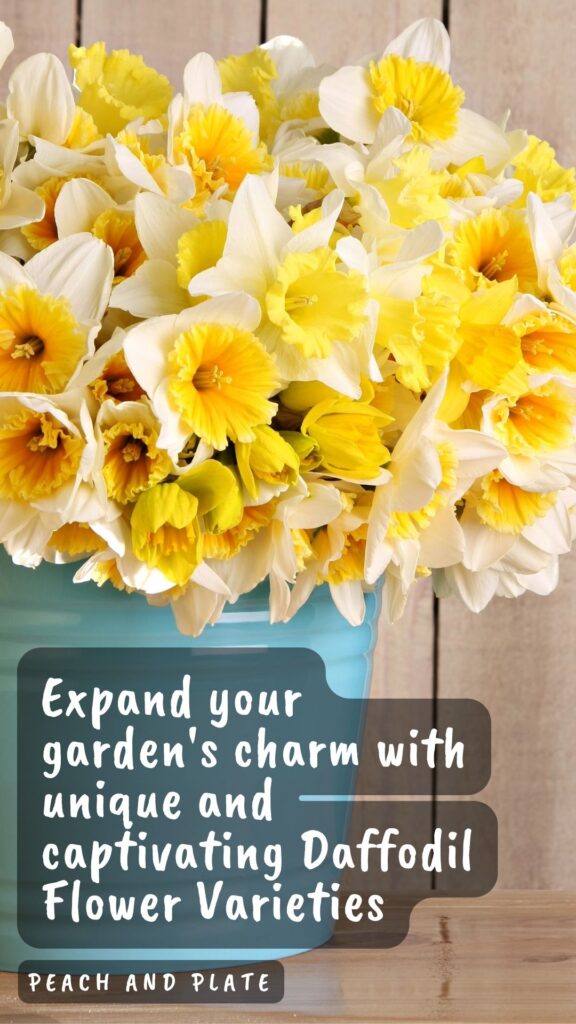
Expand your Garden’s Charm with unique and captivating Daffodil Flower Varieties
Daffodils are a beautiful sign of spring and personally one of my favorite flowers. They are an easy flower to grow that can bring a bright flash of color to your garden. While many people picture the classic yellow trumpet daffodil, this flower family (officially Narcissus) is incredibly diverse, with thousands of different varieties. These varieties are classified into 13 varieties based on their flower shape, size, and petal arrangements. Understanding these varieties can help you choose the perfect daffodil to suit your garden’s style and bloom schedule.
This post may contain affiliate links. For more information, please see our disclaimer.
Here’s a look at some of the most popular and distinct varieties you might encounter:
1. Trumpet Daffodils
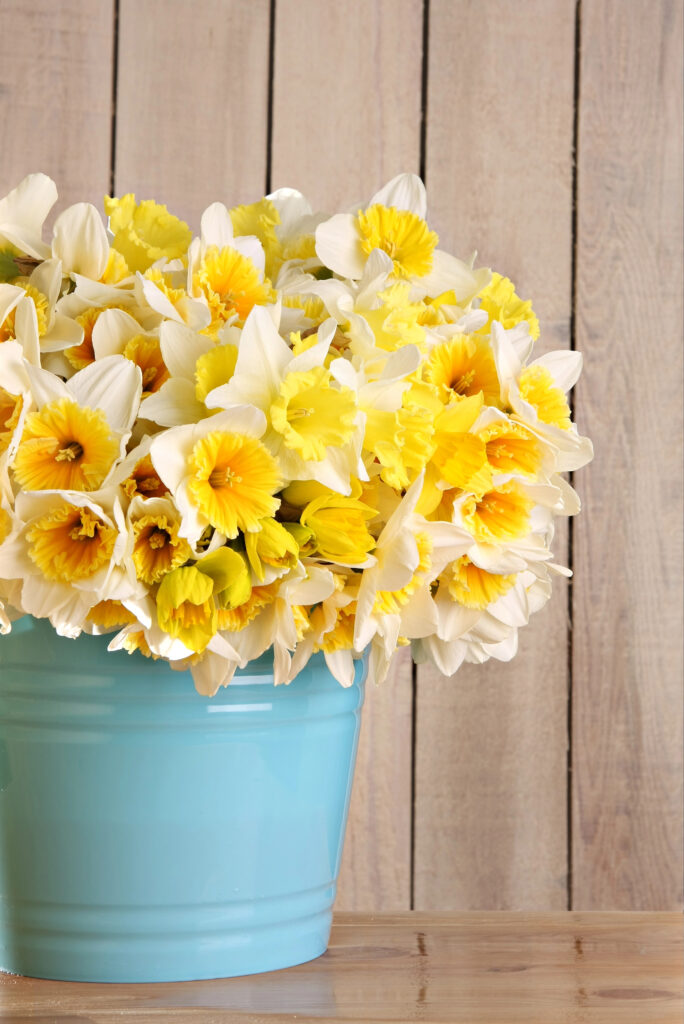
This is the classic daffodil many people imagine. They feature one flower per stem, and their central “trumpet” (corona) is as long as, or longer than, the outer petals (perianth).
- Characteristics: Bold, prominent trumpets. Often solid yellow, but can be white or bicolour (e.g., yellow petals with an orange trumpet).
- Examples: ‘King Alfred’ (classic yellow), ‘Mount Hood’ (pure white).
2. Large-Cupped Daffodils
Similar to trumpets, these also have one flower per stem, but their central cup is shorter than the petals, though still at least one-third the length.
- Characteristics: Versatile, with a wide range of color combinations and cup shapes, often with contrasting colors between the cup and petals.
- Examples: ‘Ice Follies’ (white petals, pale yellow cup), ‘Carlton’ (all yellow, very fragrant).
3. Small-Cupped Daffodils
These daffodils also have a single flower, but their cup is less than one-third the length of the petals, making the petals more dominant.
- Characteristics: Delicate appearance, often with cups in contrasting colors like red, orange, or green against white or yellow petals.
- Examples: ‘Barrett Browning’ (white petals, small orange cup), ‘Hawera’ (small, pale yellow).
4. Double Daffodils
These unique daffodils have either a double perianth (petals), a double corona (cup), or both, creating a very full, ruffled look.
- Characteristics: Lush, voluminous flowers that can resemble peonies or gardenias. Available in various color combinations.
- Examples: ‘Tahiti’ (yellow petals with orange-red doubling), ‘Replete’ (white petals with pink doubling).
5. Triandrus Daffodils
Known for their clusters of dainty, downward-facing flowers on a single stem, often with petals that sweep back gracefully.
- Characteristics: Elegant and airy, typically white or yellow, often fragrant. Each stem can have 2 to 6 flowers.
- Examples: ‘Thalia’ (pure white, very popular), ‘Hawera’ (small, pale yellow flowers, also classified here).
6. Cyclamineus Daffodils
These daffodils are easily recognized by their sharply swept-back petals, giving them an almost wind-swept appearance, and their relatively long, narrow cups.
- Characteristics: Distinctive, often small flowers with petals that are strongly reflexed. Great for naturalizing.
- Examples: ‘Tête-à-Tête’ (miniature yellow, very common), ‘Jetfire’ (yellow petals, orange cup).
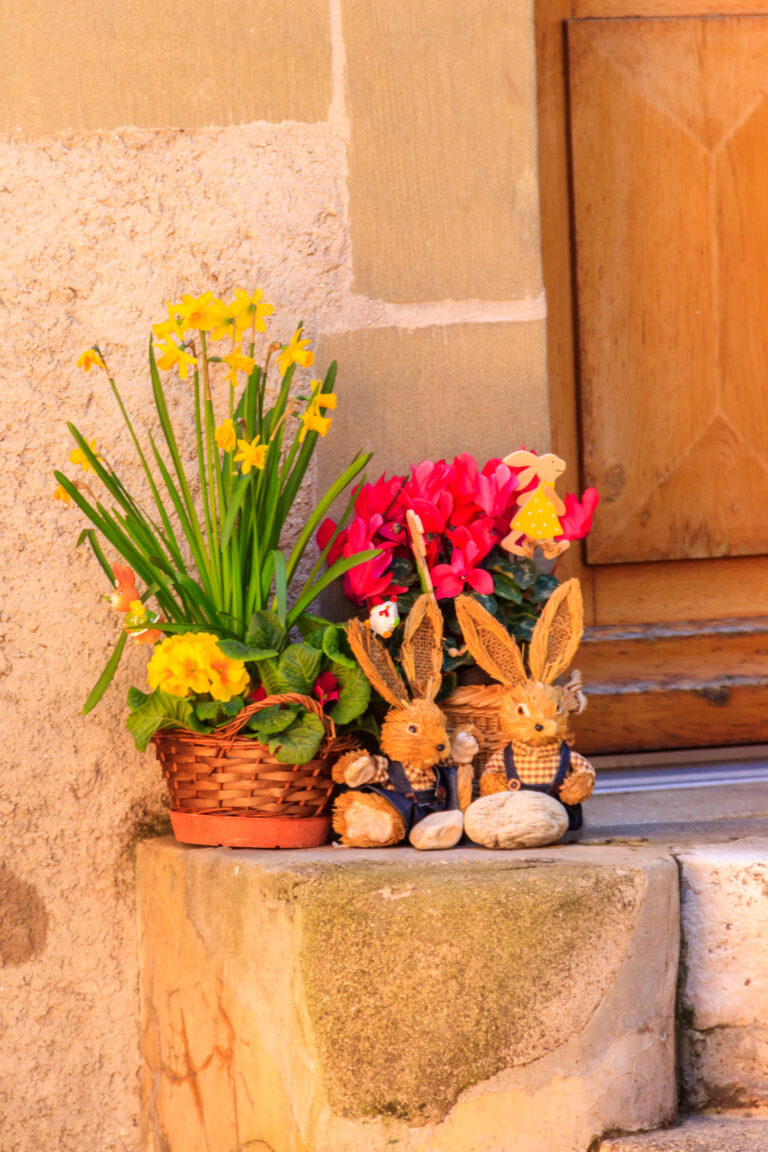
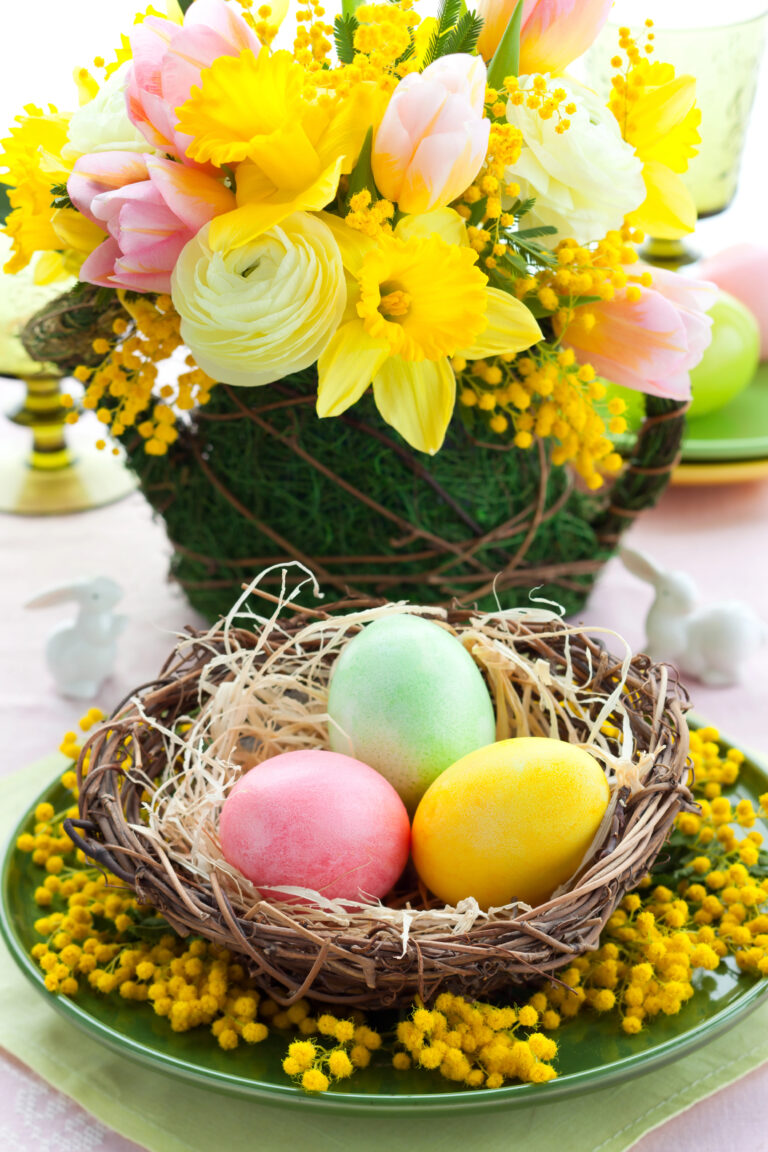
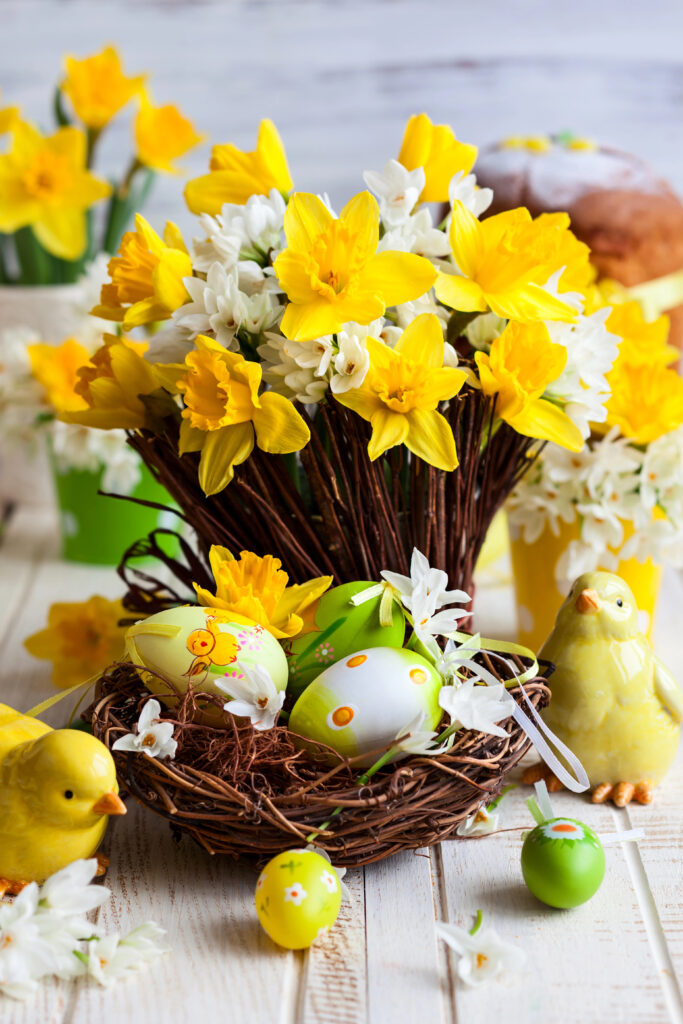
Easter is a perfect time to use daffodils for your decorations
7. Jonquilla Daffodils
These popular daffodils produce clusters of small, fragrant flowers per stem, often with short, flat cups and slender, rush-like foliage.
- Characteristics: Highly fragrant, typically yellow, gold, or white. Excellent for borders and containers.
- Examples: ‘Baby Moon’ (small, fragrant yellow), ‘Pipit’ (lemon yellow fading to white).
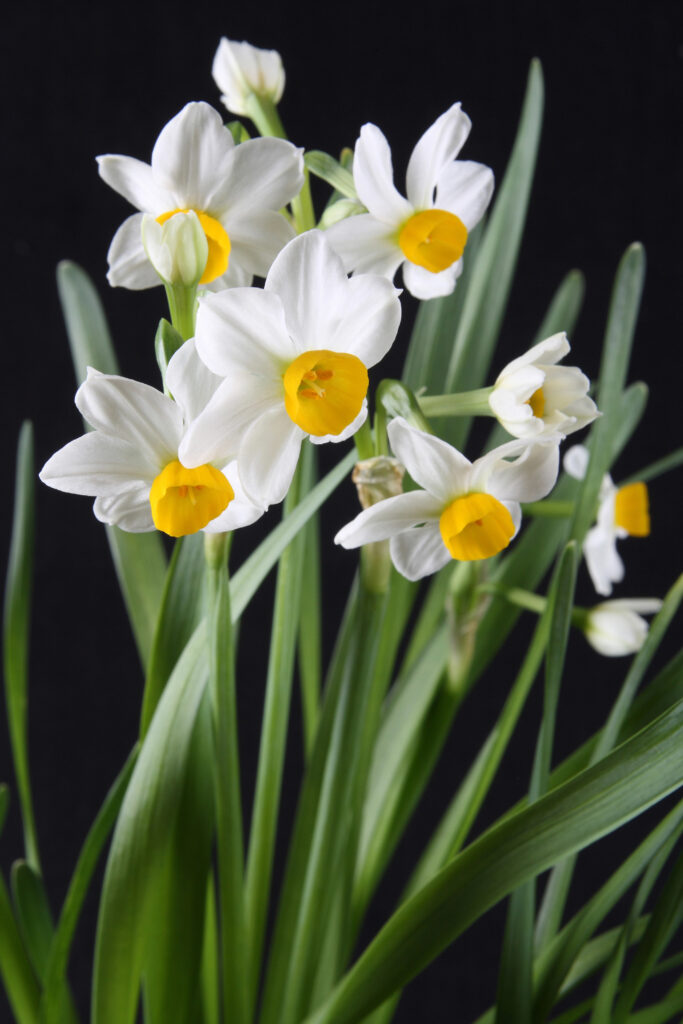
8. Tazetta Daffodils
Often called “paperwhites” or “cluster-flowered daffodils,” these produce many flowers (often 3 to 20) per sturdy stem.
- Characteristics: Very fragrant, usually white or yellow with small cups. Excellent for forcing indoors.
- Examples: ‘Paperwhite Ziva’ (white, strong fragrance), ‘Geranium’ (white petals, orange cup).
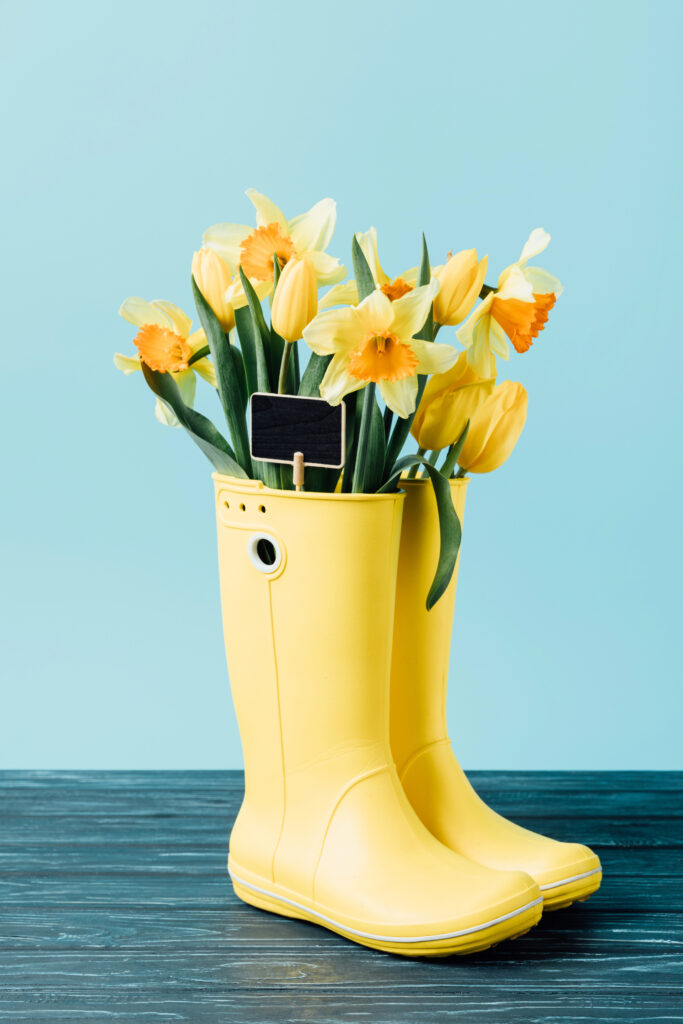
Easter decoration ideas: pair daffodils with brightly colored Wellington boots
9. Poeticus Daffodils
Known as “Poet’s Narcissus,” these feature dazzling white petals surrounding a very small, flat, often green or yellow cup rimmed with red.
- Characteristics: Extremely fragrant, very refined and elegant appearance. Among the last daffodils to bloom.
- Examples: ‘Actaea’ (white petals, small red-rimmed cup).
10. Species and Wild Hybrids
This group includes the wild forms of narcissus and their naturally occurring hybrids.
- Characteristics: Often small, very natural-looking flowers, perfect for rock gardens or naturalizing in meadows.
- Examples: Narcissus bulbocodium (Hoop-Petticoat Daffodil).
11. Split-Corona Daffodils
In this group, the corona (cup) is split for more than half its length, creating an unusual, often star-like or frilly appearance.
- Characteristics: Very showy and decorative, with cups that lay flat against the petals.
- Examples: ‘Orangery’ (white petals, orange split cup), ‘Changing Colors’ (yellow petals, orange-red split cup).
With such a wide array of shapes, sizes, and colors, there’s a daffodil variety to fit almost any garden design and personal preference, making them a versatile and cherished harbinger of spring.