How to Arrange Flowers: A Simple Guide to Beautiful Bouquets
Bringing fresh flowers into your home is a lovely way to add beauty and life to any space. While a professional florist might make it look effortless, creating a beautiful floral arrangement at home is more accessible than you might think. With a few basic guidance and some practice, you can craft stunning bouquets that reflect your personal style.
This post may contain affiliate links. For more information, please see our disclaimer.
1. Gather Your Materials
Before you start, make sure you have everything you need:
- Fresh Flowers and Greenery: Choose a variety of textures, shapes, and sizes.
- Vase: Select one that complements your flowers and the space it will occupy.
- Sharp Scissors or Floral Shears: Essential for clean cuts that help flowers absorb water.
- Flower Food: Provided with most purchased bouquets, or you can make your own.
- Clean Water: Always start with fresh water.
- Work Surface: Protect your table with newspaper or a mat.
2. Prepare Your Flowers
Proper preparation is key to extending the life of your arrangement:
- Remove Lower Foliage: Strip any leaves that would fall below the waterline in your vase. Submerged leaves can decompose, fouling the water and shortening the flowers’ life.
- Trim Stems: Using your sharp shears, cut about an inch off the bottom of each stem at a 45-degree angle. This increases the surface area for water absorption and prevents the stem from sitting flat on the bottom of the vase.
- Hydrate: Place your trimmed flowers immediately into a bucket of clean water with flower food for at least 30 minutes, or even a few hours. This allows them to drink deeply and perk up before arranging.
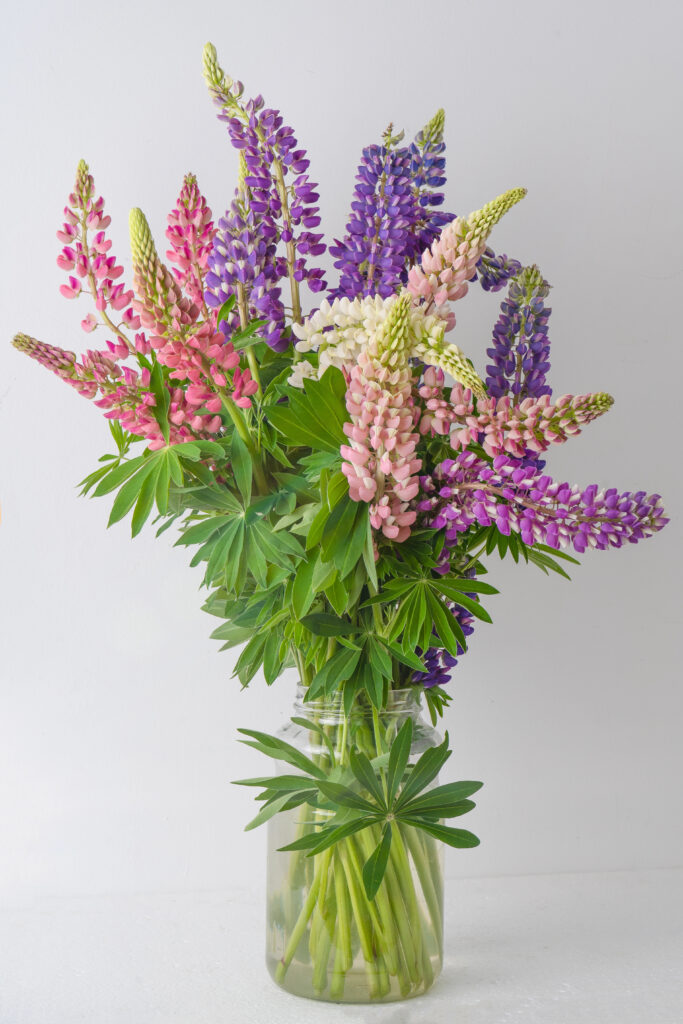
3. Choose Your Vase Wisely
The vase should support your arrangement, not overwhelm it.
- Opening Size: A wide-mouthed vase is good for large, sprawling arrangements, while a narrower opening is better for keeping stems upright.
- Height: A general rule is that your finished arrangement should be about 1.5 to 2 times the height of your vase for balance.
- Style: Consider the vase’s material and color. Clear glass is versatile, while ceramic or colored vases can add to the overall aesthetic.
4. Build Your Foundation (The Greenery)
Start by establishing the shape and framework of your bouquet with greenery.
- Create a Grid: If your vase has a wide opening and you’re not using floral foam, crisscross some sturdy stems of greenery to create a natural grid. This will help hold other stems in place.
- Shape: Place greenery around the rim and center of the vase, allowing some pieces to extend outwards to create a natural, flowing look. This greenery base helps cradle the flowers.
5. Add Your Filler Flowers
Once your greenery foundation is set, start adding your “filler” flowers. These are typically smaller, less prominent blooms that fill gaps and add texture. Think baby’s breath, solidago, or smaller sprigs of statice. Distribute them evenly throughout the greenery, following the overall shape you’re aiming for.
6. Introduce Your Focal Flowers
These are your showstoppers – the largest, most striking, or most expensive blooms.
- Placement: Place your focal flowers first, typically in the center and slightly lower than your other flowers, to draw the eye. Don’t be afraid to group a few focal flowers together.
- Vary Heights: Cut stems at different lengths to create depth and visual interest. Avoid making all the flowers the same height, which can look flat.
7. Fill in with Secondary Flowers and Details
Now, fill in any remaining gaps with your secondary flowers. These are often mid-sized blooms that complement your focal flowers.
- Balance: Distribute them evenly, ensuring color and texture are balanced throughout the arrangement. Step back periodically to assess your progress.
- Movement: Allow some stems to reach higher or trail lower than others. This adds natural movement and avoids a stiff appearance.
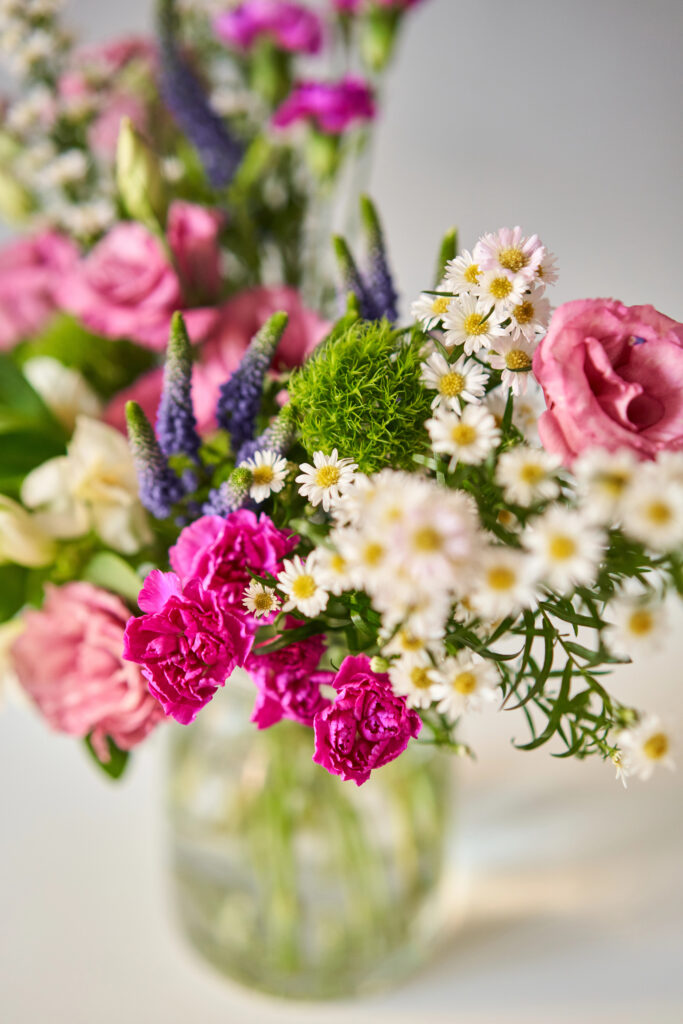
8. The Finishing Touches
- Rotate: Turn your vase as you work to ensure the arrangement looks good from all angles.
- Adjust: Don’t be afraid to remove and reinsert stems until you’re happy with the balance and flow.
- Water: Once complete, fill the vase with fresh water and flower food. Check the water level daily and change the water every few days to keep your arrangement looking its best.
With these steps, you’re well on your way to creating beautiful floral arrangements that brighten your home and delight your senses. Happy arranging!